Extensio animi ad magna - Stretching the souls to great things

Sunday, 28 June 2015

Reading Ecclesiates

PK Online
I think Ecclesiastes is perhaps the most relatable book in the Bible. No matter if you are a Christian or not, you can find something within this book that directly applies to your life.

It is believed that King Solomon wrote this wisdom book, and with him being one of the smartest people on Earth, clearly something important is included here. I believe that the key message of the book is something important that everyone will come to realize at some point in their life. Simply put, that is; everything is meaningless without God in the picture.

King Solomon, with all of his wealth, all of his wisdom, all of the freedom laid out before him, he found it all pointless. That begs the question why? Especially in a society today, when we are driven by getting more and more possessions, travelling farther and farther, monopolizing everything we can, we have to ask why? Why do we feel and act in such a way, especially if in the pinnacle of it all, we'll only wake up and find that everything is pointless.

Some people may disagree, but I think everyone sets their lives up in a certain way. They try to dull their senses, dull the nagging feeling within themselves that there is indeed something more to life in general, by surrounding themselves with emotions, and possessions. Everyone at some point in their life enters a critical stage, a stage of realization. They realize that there has to be something else to this life. They realize that they are missing something; the classically termed "hole in the heart".

And no matter what you have bought into, whatever the world invents to try to satisfy that questioning, it won't be enough. Solomon at the point where he could not get anymore of everything, he realized that his whole life had been a waste. Ultimately, when it is all said and done, everything that the world has to offer ends up coming close, but not close enough, falling short of its supposed result. Possessions can easily be broken or lost, power stripped away, everything levelled to the ground. The only thing that will constantly remain is God, and His amazing, patient, almighty, perfect love.

Start your moment of realization now. Begin your journey for answers. Is everything meaningless in your life? Or are you actually living for something worthwhile?

Tuesday, 23 June 2015

Reading Proverbs

Sarah Elizabeth Writes
Proverbs is a book all about wisdom. Written by many wise men of history, the book is a collection of knowledge that can easily be applied to anyone's life. Drawing from the wisdom of Solomon (the smartest man in history), Agur (unknown historically), Lemuel (unknown historically), and a few other authors labelled as "the wise", these proverbs, or quotes of useful information, apply to past, present and future.

In my opinion you can never achieve enough wisdom. The search for more and more knowledge never ends. However, much like our faith, we can have as much as knowledge as we want, but without action, that knowledge is meaningless. In the same way as our relationship with Christ, we can know all about Him, know all that He has done, and will do, but without acting on that knowledge, without putting that information to use, it just wastes away! Ultimately, the smartest person in the world isn't the person who knows the most, its the person who with the greatest efficiency puts their knowledge to use.

Thursday, 18 June 2015

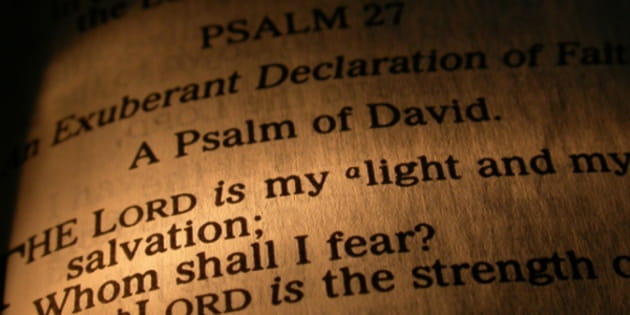
Reading Psalms

Crosswalk
Psalms is definitely one of my favourite books of the Bible, mainly because of its focus on worshipping God. Over and over again, through the use of multiple authors, the poems and songs included in the book remind us that there are multiple ways to worship God, and multiple reasons as to why we should worship God.

It is true that Psalms is composed of mainly songs, but there are multiple poems also in the book that focus on worship. The poems and songs themselves also reference ways to worship God. The main one would be through song, or music, with Psalms alluding to tambourines, using voices, lyres, and other instruments to make joyful noises for the Lord. A huge aspect of our Sunday morning services is this form of worship, yet the music presented can also be used for personal worship time. That's one of the joys of the expanding worship industry, with artists such as Chris Tomlin, David Crowder, and many more providing instant worship through the terms of music.

Worship can also come in other forms. The multitude of poems shows that spoken and written word is on the same level as music. In fact, any form of art can be an amazing way to worship God. Whether it be painting, poetry, photography, drawing, or music, anything that is used to glorify God can be classified as worship.

Expanding this even farther, worship doesn't have to be about art. Worship is a way of living your life, a certain perspective, a way of defining each action. Every decision you make, every step you take, when you make it for God, that's worship! Psalms is filled with words, beautiful words, about almost every situation in life possible, and it always ends with coming back to worship.

Worship is the willful choice to put your hope IN & fix your eyes ON Jesus - Chris Tomlin
Worship isn't a chore or a duty; it's the natural response of a devoted heart. - Chris Tomlin
Worship isn't a feeling you wait for, it's a choice you make. - Chris Tomlin

Thursday, 4 June 2015

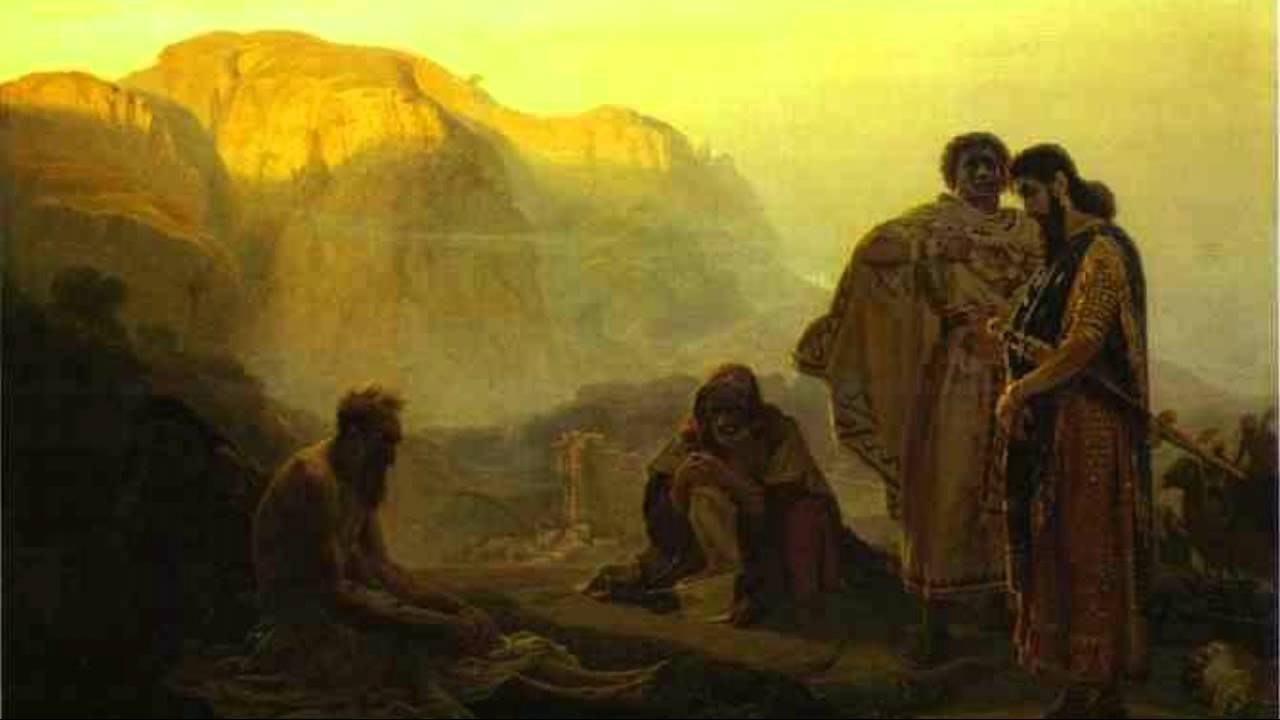
Reading Job

This book is perhaps the most puzzling for me. In fact, I find all the prophecy books hard to get through, or hard to understand. The reason is you can't pick up the meaning of the book simply by reading it; you have to really research the content as well. Without that research, gleaning a complete understanding of the book is nearly impossible.

The biggest area that I focused my research on this time around was what each friend of Job was trying to say, or what the purposes of their speeches were. Bad things do happen to people, even to the best of people, and I think it is interesting to read what reasons these three gave for Job's situation. When bad things do happen, we do tend to search for answers. These three provide some common answers, but as we see from a fourth bystander and the Lord Himself, they are false.

The first friend Eliphaz states that Job brought this upon himself. He believes that Job knowingly committed some evil. Eliphaz states that Job's sin equals instant punishment. Essentially God gets mad with the person's sin and right away acts.

The second friend Bildad backs that theory up. He also states that Job must be punished because of his sin. Bildad assumes that everything bad that happens is a direct result of sin. The difference with Bildad is that he doesn't claim Job had to intentionally commit evil.

The third friend Zophar correctly states that people can repent, and they need to repent. However, he makes a mistake in assuming that Job needed to repent. He denies that Job could possibly be innocent.

YouTube
What the three friends should have done is mourn with Job. We are to mourn with those that mourn, be sad with those who are sad, and be merry with those who are merry. As friends, these three should have recognized what Job needed most in that situation, which was support and not criticism. Job needed love, understanding, and teaching, not rebuking, questioning, and harsh words.


Monday, 25 May 2015

Reading Esther

Esther is a refreshing story stuck in between two similar accounts of hurt, Nehemiah and Job. Esther tends to veer slightly away from the writing style of Nehemiah and Job, which includes multiple parallels, and other poetry, or lists. Instead, Esther reads as almost a storybook. In fact, the story of Esther is perhaps the most famous regarding a female in the Bible.

A lot of people like to focus on the Israelites thriving in a foreign kingdom aspect of the story. In truth, this is a great story to set an example for that, especially if we base our lives off of Esther or Mordecai's. Esther and Mordecai together were able to create an environment that was supportive of the Israelites and their religion. Their determination was perhaps the greatest contribution to that success.

However, while reading, I focused on a different lesson. It also tends to be a popular lesson taken from the story, which is that God always provides. That truth could not be more evident in this narrative.

The truth is, not much background is given regarding Esther's history. But she is placed within the king's household to her benefit, and to her people's. God is clearly provided for both in this story, by increasing Esther's standard of living, and at the same time, keeping his people safe. Not only does God keep his people safe through Esther, He also provides a new lifestyle where they don't have to be afraid and are almost treated like equals.

Yet, not only does God provide, but He also provides using unique methods, through people that no one would expect He would use. He uses a woman which is extremely unique considering the time and culture. He uses an Israelite in a foreign country that looked down on those people. And in a way, He also uses a foreign king to serve His purpose.

Lemonville United Church

Monday, 18 May 2015

Reading Nehemiah

The next book in the Bible is closely connected with the previous one, Ezra. Nehemiah talks about the same period of time, with many of the same events, just with a different perspective. In fact, Ezra and Nehemiah are so similar, in the Hebrew Bible, they are combined to form one book. However, other then the different perspective, there are other differences. One would be that Ezra focuses on the rebuilding of the temple, whereas Nehemiah focuses on the rebuilding of the wall. Author and Speaker Ray Stedman states that Ezra focuses on making the first step to reconnecting with God, while Nehemiah focuses of fulfilling the need for strength and security. Nehemiah tends to also highlight the powers up against his work, especially from foreign enemies that were frightened. His account is primarily first hand perspective, whereas sometimes in Ezra, it is third person, or an outside perspective.

However, once again, to be highlighted is the attitude and character of Nehemiah. He is another character who I feel does not get recognized enough. Again, I feel we should be studying Nehemiah for many of the same reasons as Ezra. Nehemiah was in a foreign situation, where the situation was extremely bleak. However, Nehemiah never lost sight of God, and dedicated his every action to the Lord. Nothing could distract him, nothing would prevent him from working for God. His passion and commitment were perhaps his most defining qualities.

There are a few special qualities that I think can be derived from Nehemiah's story that are slightly different than Ezra's. First, this project was very much a team project. The book of Nehemiah highlights the different roles that each person played in this rebuilding effort. Even more interesting to me is how the book highlights the two major leaders in the project; Ezra and Nehemiah. Together, they are working towards the same end result, yet each plays a different role in getting to that finish line. Two leaders, working together, using different methods, but simultaneously towards the same result. Rather than have one person shoulder all the responsibility, the project is shared between two capable men, who compliment each other with their contrasting styles and abilities.

I also noticed that Nehemiah immersed himself in prayer. Before the beginning of this grand adventure, Nehemiah immediately looked to the Lord for advice and for help. Throughout the journey, whenever an obstacle presented itself, Nehemiah again, looked to the Lord. Constantly, he was praying and praising, thanking and asking for help. His communication with God never ended. This perhaps could be the defining reason as to why he was so successful in his mission.

Friday, 15 May 2015

The Importance of Youth

A gripping issue in the church today, one that could prove detrimental to the survival of our faith, is the importance of youth. Too many times there are situations were youth are pushed to the side, ignored, or forgotten. Within the church, this absolutely can't happen.

The reasons why are quite simple actually. The difficult part is implementing action. But first, let's discuss why youth are important.

First, it clearly states in the Bible that all young people are especially important to Jesus. Matthew 19:14 includes a statement from Jesus to his disciples regarding them trying to hold back children from coming to see the "Teacher." They concluded that Jesus had much better things to do with His time then babysit children. Jesus responded, "Let the little children come to me. Don't stop them! For the Kingdom of Heaven belongs to those who are like these children." (NLT) Once when my mother used to teach Bible devotions as part of our homeschooling classes, she taught about this very verse. The key component of the verse is "those who are like these children." How can adults be like children or youth? The answer lies in the character of youth. Unlike adults, who are consumed with worry of trivial matters in life, the passion that consumes youth for even the smallest things is a huge contrast. Jesus is stating that those who pose a character, a passion like that of a child or youth is worthy of the Kingdom of Heaven.

Secondly, youth also fall under the category of "all people". By all people, I'm referring to the Great Commission. It is a Christian's duty to evangelize to all people, no matter their age. But it shouldn't just be a duty. It should also be something we long to do. It should be something that is ever present on our minds, and in our hearts. Again, age shouldn't matter. We should be looking at the youth of this generation, and genuinely feel broken at their current state. Youth of today are lost, mired in horrible influences that are completely destroying their future without the church.

Lastly, for a more practical purpose, the youth are the future church. If the church hopes to survive, it needs to recruit members now, and preferably at a young age. This does sound a bit like a regiment, but again, it should be because the church is worried about the world in the future. The best way to ensure that the mission is continued on is by helping youth now, so they are prepared for the future.

Now for the action. How does the church show that it values youth? I think the answer is actually more simple then some would believe. At times, youth need to be put first. Their needs and wants, their ideas, their leadership should be valued equally with others for certain, but at times, decisions need to be made in order to favour youth. Currently, the debate ranges from the style of music to the style of preaching to the dress code. Of course, traditionally, things are set in stone. Many tend to disagree with change. But, inevitably, change will happen whether people like it or not. So, will the church be dragged along in this change screaming and fighting, or will they act boldly, and take the first step to welcome youth to a new generation of the faith?